The St Andrews Student Housing Crisis: What's Really Driving It (And What Happens Next)
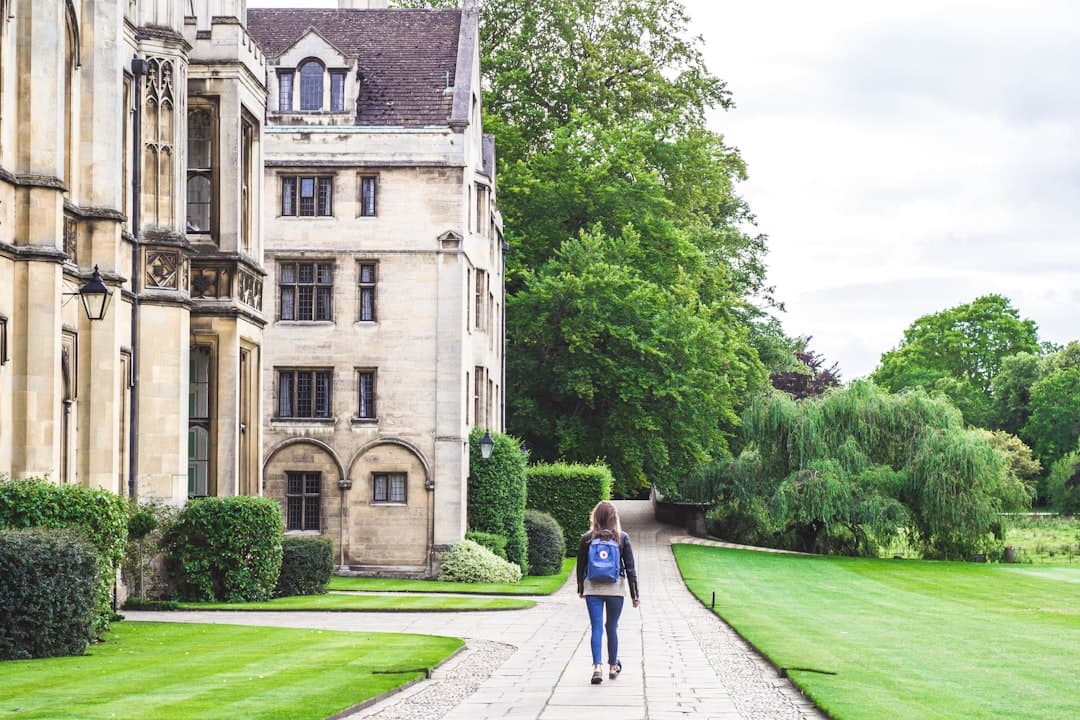
You already know the market is brutal. You probably watched third-years last January sprint between viewings, refresh Studentpad at midnight, and still end up settling for something too expensive in the wrong part of town. Now it's your turn. But before you enter the St Andrews private rental market, it's worth understanding what you're actually up against — because this isn't just a tight housing market. It's a structurally broken one, and the forces behind it go far deeper than supply and demand.
This is an investigation into how St Andrews became the most dysfunctional student housing market in Scotland, who is responsible, and what — if anything — is about to change.
A Town That Was Never Built for This Many Students
Start with the numbers, because they are genuinely extraordinary. St Andrews has a population of roughly 20,000 people and a student body of approximately 10,500. That means students account for around 58% of the town's total population — more than double the equivalent ratio at Oxford or Cambridge, and significantly higher than Durham, the closest UK comparator. The University of St Andrews houses approximately 4,100 students directly. That leaves somewhere between 6,000 and 6,500 students competing for private accommodation in a town with fewer than 7,000 total dwellings, a significant chunk of which are occupied by permanent residents, listed on Airbnb, or otherwise off the market.
The student population was roughly 3,000 in 2002. It exceeded 10,000 by 2020 — a level the university's own planning had originally projected for 2024. This threefold expansion happened inside a medieval coastal town with no railway station, no realistic capacity for suburban sprawl, and a conservation area that constrains most forms of new development. The geography is as much the problem as the politics.
The consequences of this mismatch became impossible to ignore in August 2022. The university acknowledged that 130 students had contacted accommodation services unable to find housing. The Campaign for Affordable Student Housing (CASH), a student advocacy group, put the figure at 350–400 students without accommodation just two to three weeks before term began. Students reported sleeping in cars and sofa-surfing. The university's emergency response was to secure beds at The Old Mill in Dundee — 14 miles away, nearly an hour's commute from campus — at £118 per week. Around 140 students were offered this placement. A subsequent CASH survey found that 86% of those students reported negative mental health impacts, and 96% of first-years said the separation had a serious negative impact on their studies.
The HMO Cap, the Locked Bedrooms, and the Holiday Let Takeover
The 2022 crisis was not an accident. It was the predictable outcome of at least three overlapping policy failures, each of which compounded the others.
The HMO overprovision policy is where the most blame is concentrated, and it deserves serious scrutiny. Under Scottish housing law, any property occupied by three or more unrelated people sharing basic amenities requires a House in Multiple Occupation (HMO) licence. St Andrews already had an extraordinary concentration of HMOs — approximately 974 licensed properties, representing around 85% of all HMOs in Fife. In 2019, following a public consultation in which 78% of permanent residents favoured no growth, Fife Council unanimously adopted a zero-growth overprovision policy covering the entire St Andrews area.
The policy's stated intention was to protect community balance. Its practical effect has been to make the housing shortage worse. Since the cap was imposed, St Andrews has lost 17 HMOs — a net reduction of 124 beds. More significantly, the university estimates that more than 200 bedrooms now sit unoccupied in properties where landlords deliberately restrict occupancy to two students to avoid crossing the three-person HMO threshold. Landlords would rather leave a room empty than trigger a licensing requirement. This is the so-called locked bedroom phenomenon, and it represents a quiet, largely invisible drain on the town's available housing stock.
Short-term lets have compounded the problem from a different angle. Approximately 1,000 licensed short-term lets now operate in St Andrews, representing 5.4% of the town's housing stock. Combined with HMOs, these two categories account for roughly 20% of all housing in the town. The economics are straightforward: a landlord who can charge £305 per night during the golf season has little incentive to offer a twelve-month tenancy to students at a fraction of that return. One student reported their rent increasing from £816 to £1,200 per month in a single year when their flat was converted to a luxury retreat — a 47% jump driven not by market forces in the student sector, but by the profitability of tourism.
The demolition of Albany Park is the third factor, and it matters more than it is usually given credit for. The original Albany Park residence provided approximately 340 beds at roughly £3,500 per year — by far the cheapest hall in the university's portfolio. It was demolished in 2018 and 2020. Its replacement, a 703-bed development in partnership with Campus Living Villages, received planning approval in November 2023. It will not be ready for occupation until autumn 2026 at the earliest. The university removed 340 affordable beds from the market and left a gap of at least six years before replacement capacity arrives. During the precise period when student numbers were growing most rapidly.
The Rent Numbers Are as Bad as You Think
Against this backdrop of artificial scarcity, rents have risen to levels that are extraordinary even by Scottish standards. A DJ Alexander market overview from April 2023 found the average monthly rent across all property types in St Andrews was £1,620 — 60% higher than Edinburgh and more than double Glasgow or Aberdeen. These figures include luxury and tourist properties, but student-specific rents have followed the same trajectory.
Crowdsourced rent data from CASH's 2024 rent map shows private rents per student in shared accommodation ranging from £400–£600 per month on the outskirts to £700 in mid-range areas to £900 or more in prime locations like North Street. Average student rent rose from approximately £527 per month in 2019 to £760 per month in 2022 — a 44% increase in three years.
The affordability picture is not just uncomfortable, it is structurally untenable for a significant portion of the student body. NUS Scotland research found that average student rent in Scotland consumed 88% of the maximum maintenance loan, leaving just £22.42 per week for food, transport, books, and all other living costs. At St Andrews specifically, even the cheapest university hall — Gannochy House at £6,246 per year — absorbs between 55% and 65% of total student support. The most expensive catered halls, at £12,976 per year, exceed the maximum support package entirely. NUS UK's 2024 housing survey found that 34% of Scottish students had struggled to pay rent in full, higher than the UK national average of 26%.
The market does not treat all students equally. As The Saint, St Andrews' student newspaper, has documented: students from affluent families can absorb extortionate prices that systematically price out lower-income peers. The housing shortage is not merely an inconvenience for students with financial means. For students without them, it can mean genuine precarity — skipped meals, unheated flats, or being pushed out of the town entirely.
What Is Actually Changing — and What Isn't
The most significant development in the pipeline is the new Albany Park. The 703-bed, six-building development — the university's largest single capital project in accommodation — is scheduled for autumn 2026, with over 30% of rooms at standard pricing. An additional 148 beds at Gap Site 3 on North Haugh have also secured planning consent. The private sector has added SPACE St Andrews (208 rooms, opened 2024/25), and Phase 2 of the Kilrymont development at the former Madras College site is due in 2026, with a further 703 rooms in Phase 3 approved in May 2025.
In total, the pipeline represents roughly 1,850 new beds arriving between 2024 and 2026. This is the largest single expansion of student housing in St Andrews in a decade, and it will reduce pressure at the margins. But the fundamental arithmetic does not resolve. Even with these additions, the structural gap between the student population and available housing stock will persist. And the regulatory environment continues to send mixed signals: Fife Council's latest consultation on the HMO overprovision policy closed in 2025 with results still pending, meaning the locked bedroom problem may or may not be addressed.
The most consequential external factor is the Housing (Scotland) Bill, currently progressing through the Scottish Parliament. At Stage 2, MSPs voted to extend rent control powers to purpose-built student accommodation and university halls, at a rate of CPI plus 1% with a maximum of 6%. If this survives to Stage 3 and becomes law, it would fundamentally change the economics of student accommodation in St Andrews — potentially capping the rent inflation that has made the market so hostile for lower-income students, though critics argue it could also discourage new development.
What This Means for You Right Now
Understanding the structural causes of this market does not make it less stressful to navigate. But it does clarify a few things.
First, the compressed timeline is real and not going away. Letting agents release properties in late January or early February, and they go fast — not because agents manufacture urgency, but because genuine scarcity means properties are snapped up within hours. Forming your flat group in October, having finances in order before Christmas, and being ready to move on viewings the day lists go live is not paranoia. It is appropriate preparation for the market as it actually exists.
Second, the locked bedroom problem means availability is worse than it looks. The headline figure of 974 HMO licences suggests a substantial pool of shared housing. The 200+ bedrooms sitting deliberately empty in unlicensed properties suggests the real number is meaningfully smaller.
Third, new supply is coming, but not in time for most current second-years. Albany Park will help the cohorts behind you more than it helps you. Plan for the market as it is today.
Fourth, the welfare stakes are documented. If you are struggling — financially, practically, or emotionally — with what the housing market is demanding of you, you are not alone and you are not overreacting. NUS Scotland's research shows this is a systemic problem with systemic effects on student mental health and academic performance.
The St Andrews student housing market is a case study in what happens when a world-class institution grows far faster than the town around it can accommodate, when regulatory choices intended to protect one group inadvertently harm another, and when the economics of tourism outcompete the needs of a resident student population. Knowing this does not find you a flat. But it means you are walking into the process with your eyes open — which is more than most second-years can say.
For listings, landlord reviews, letting agent contacts, and practical guidance on navigating the St Andrews private rental market, visit StAndrewsFlats.uk — an independent resource built specifically for St Andrews students.
Never miss a St Andrews flat again
Free instant alerts the moment a new property appears across all major letting agents — so you can act fast before it's gone.
Set up free alerts →